Vacuum Stress in Pets: Calm Training in 5 Easy Steps
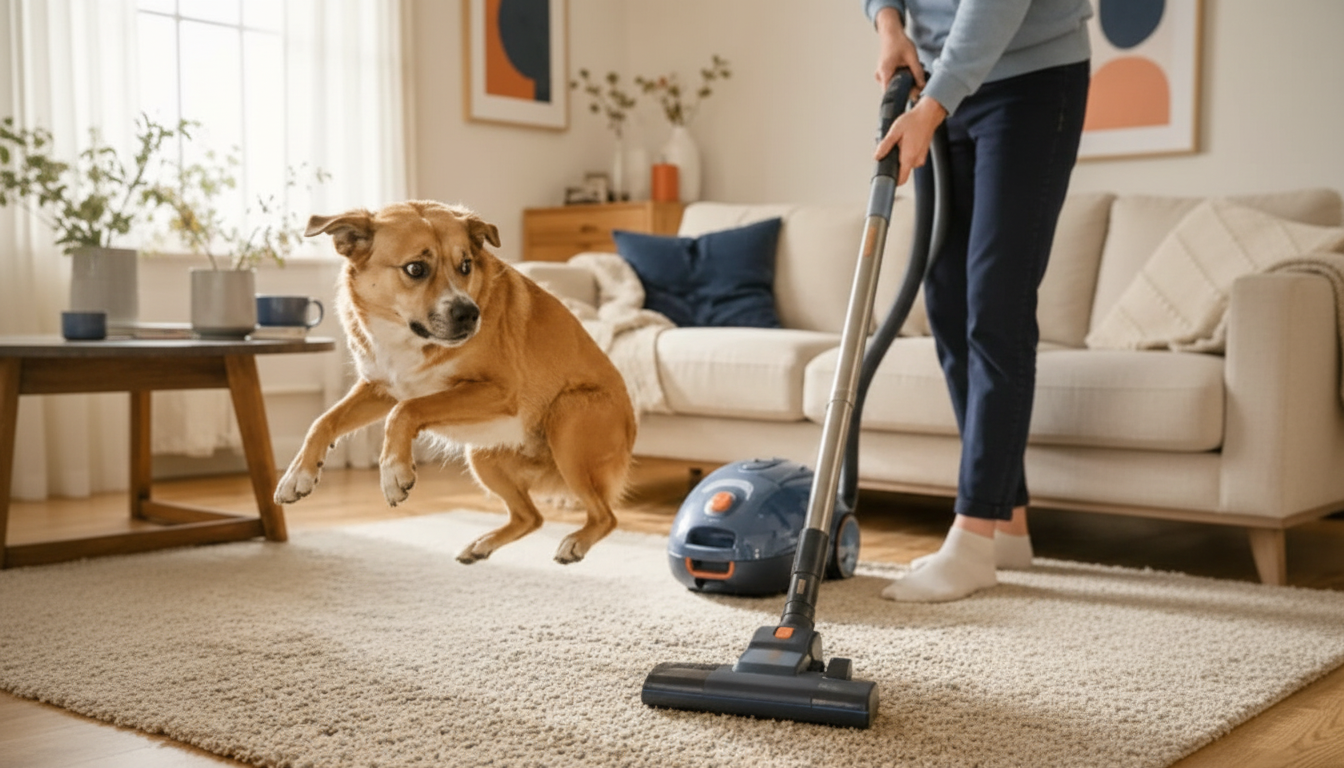
Helping Pets Handle Vacuum Stress: A Calm, Step-by-Step Training Plan
Vacuum cleaners can feel overwhelming to many pets: loud sound, strange movement, strong airflow, and unpredictable direction changes. The good news is that fear can often be reduced with a gradual plan that pairs the vacuum with safety, distance, and rewards. Use the steps below to build calmer routines for dogs and cats while keeping cleaning practical. For more guidance, see Adopting an under-socialized dog.
Why the Vacuum Triggers Stress
- Noise sensitivity: The pitch and volume can be startling, especially for young pets or those with past negative experiences.
- Visual threat: A large object that approaches, pivots, and follows can look like predator-like movement.
- Vibration and airflow: Floor vibration and air movement add sensory load, particularly for cats and small dogs.
- Loss of control: Pets may feel trapped if the vacuum blocks doorways or corners them during cleaning.
If your pet’s reaction seems extreme, it can help to review general behavior guidance from trusted organizations such as the American Veterinary Medical Association (AVMA) or the ASPCA. For further reading, see From Stress to Serenity: OSU expertise helps Lucy the dog ….
Recognizing Early Warning Signs (Before Panic)
- Mild stress signals: Lip licking, yawning, whale eye, ears pinned back, tail tucked, crouching, hiding, or freezing.
- Escalation signs: Barking, growling, swatting, lunging, frantic attempts to escape, trembling, drooling, panting, or accidents.
- Goal for training: Keep your pet under threshold—aware of the vacuum but still able to eat treats, play, or respond to simple cues.
“Under threshold” is the sweet spot where learning happens. If treats are refused or your pet can’t disengage, the session is too intense and needs more distance, shorter duration, or an easier step.
Set Up a Safer Vacuum Routine at Home
- Create a predictable refuge: Set up a crate, bedroom, or high cat perch stocked with bedding, water, and a long-lasting chew or food puzzle.
- Use management first: Start with gates or closed doors so your pet never feels chased by the vacuum.
- Reduce intensity: Vacuum when the home is otherwise calm; avoid sudden starts; keep the vacuum farther away than you think you need.
- Soften the experience: Run a fan, white noise, or calm music to mask sharp peaks; vacuum in shorter sessions.
Practical tip: Put your pet in their refuge before you bring the vacuum out. That timing matters—many pets react to the “pre-vacuum cues” (closet door opening, cord movement) as much as the vacuum itself.
Training Plan: Gradual Exposure and Positive Pairing
This plan works best with tiny sessions (30–120 seconds) that end on success. Use high-value rewards: small soft treats, lickable paste on a spoon, or a favorite toy—whatever keeps your pet happily engaged.
Step 1 (vacuum off, far away)
Place the vacuum in view at a comfortable distance. Reward calm behavior (sniffing, relaxed posture, looking away) and end before stress builds.
Step 2 (movement without power)
Roll the vacuum a few feet, then stop. Reward immediately. Repeat until your pet can stay relaxed and keep taking treats.
Step 3 (sound at a distance)
Turn the vacuum on briefly in another room, then off. Reward right away. Keep it predictable: on for 1–3 seconds, then done.
Step 4 (sound + movement, controlled)
Vacuum a small area while your pet is behind a gate or in a safe room with enrichment. Reward after each short pass or after the vacuum turns off.
Step 5 (real-life practice)
Only reduce distance if your pet stays comfortable. Use a consistent pattern (start, stop, treat) so your pet learns what to expect.
Example Progression Schedule (Adjust to Your Pet’s Pace)
| Stage | Vacuum Activity | Pet Setup | Success Signs |
|---|---|---|---|
| 1 | Vacuum visible, turned off | Pet at comfortable distance; treats or toy | Relaxed body, can eat, curious but not fleeing |
| 2 | Vacuum rolled 2–6 feet, still off | Behind gate or on leash at distance | Stays in place, checks in, takes treats |
| 3 | Vacuum on for 1–3 seconds in another room | Safe space + chew/puzzle; door or gate closed | Minimal startle, quickly recovers, continues chewing |
| 4 | Vacuum on in same room but far away, short passes | Distance maintained; rewards after each pass | No hiding, can follow cues, normal breathing |
| 5 | Normal vacuuming routine | Pet chooses safe spot or calmly observes | Calm recovery, no frantic escape, routine tolerated |
What to Avoid (Common Mistakes That Increase Fear)
Extra Support for Noise-Sensitive Pets
A Ready-Made Plan You Can Follow
A structured routine makes consistency easier: short sessions, clear milestones, and a simple way to track progress can reduce setbacks. For a guided approach with practical exercises and checklists, see Helping Pets Handle Vacuum Stress.
If you’re building calmer home habits with a new dog or cat, planning ahead also helps. The Are You Ready? Pet Adoption Decision Workbook can help you think through routine, environment, and expectations so triggers like noisy appliances don’t catch you off guard.
FAQ
How long does it take for a pet to get used to the vacuum?
It varies from days to weeks (sometimes longer) depending on how intense the fear is and how consistently you train. Short, frequent sessions that stay under threshold usually create the fastest, most durable progress.
Should the vacuum be used to “desensitize” by just leaving it running?
Leaving it running can overwhelm many pets and may increase fear if they can’t escape the sound. Controlled, brief exposures paired with rewards are safer and more effective; stop before panic and step back if stress rises.
What if my pet tries to attack the vacuum?
Prioritize safety with barriers, distance, and (for dogs) a leash setup that prevents lunging near the machine. Treat it as fear or over-arousal, return to earlier training steps, and get professional help if the behavior is intense or unsafe.









Leave a comment