Pet Temperament Guide: Decode Dog & Cat Behavior
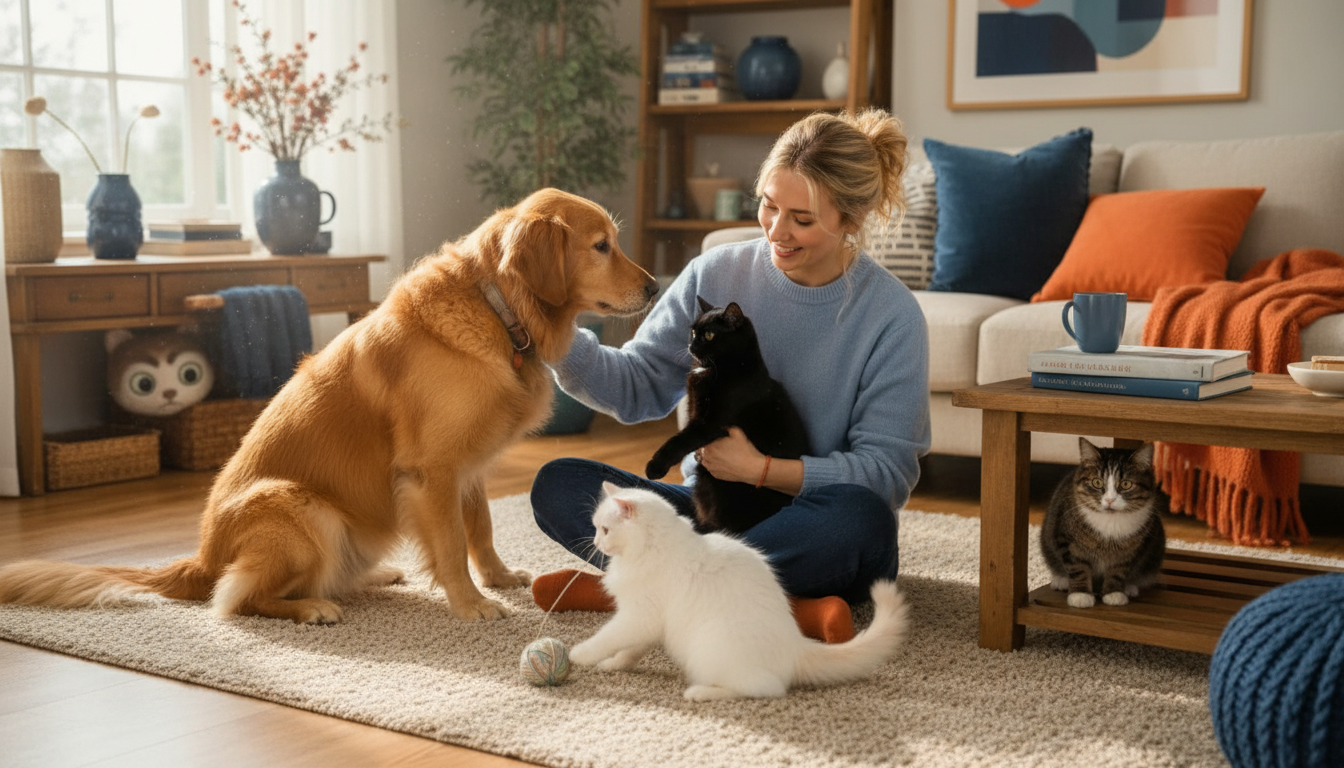
Understanding Your Pet’s Temperament (and Why It Changes Everything)
Temperament shapes how dogs and cats respond to people, handling, novelty, other animals, and everyday routines. When behavior is treated as communication—rather than “good” or “bad”—it’s easier to prevent stress, reduce unwanted habits, and make training clearer and kinder. The goal isn’t to label a pet; it’s to notice patterns, then adjust the environment and training so your pet can succeed.
Temperament vs. personality vs. moment-to-moment behavior
These terms get mixed together, but separating them helps you choose the right support.
- Temperament: relatively stable tendencies (like sociability, sensitivity, confidence, and reactivity) that influence how your pet responds across many situations.
- Personality: your pet’s broader pattern of preferences and habits, shaped by temperament plus life experience (what they’ve learned works).
- Behavior: what you see right now. It can change quickly due to pain, fear, environment, learning history, or arousal level.
Training tends to move faster when strategies match a pet’s baseline sensitivity and motivation—especially for pets that startle easily or become overexcited quickly.
What shapes a dog’s or cat’s temperament
- Genetics and early development: breed tendencies can influence dogs’ typical drives, and early handling and socialization affects both species.
- Critical early windows: gentle exposure to sounds, surfaces, people, and safe animals builds resilience; negative experiences can create lasting fear responses.
- Health and comfort: pain (dental issues, arthritis), skin irritation, urinary problems, and GI discomfort often show up as irritability, avoidance, or sudden “grumpiness.”
- Environment and routine: predictable schedules, adequate sleep, and species-appropriate enrichment reduce baseline stress.
- Learning history: repeated reinforcement (even accidental) builds strong habits; harsh punishment can increase fear and defensive aggression.
Key temperament traits to observe (and how they look in dogs vs. cats)
Temperament shows up most clearly in repeated situations: a new visitor, a vet visit, grooming, or another pet passing by.
Confidence vs. fearfulness
Confident pets recover quickly after a startle and can re-engage with the environment. Fearful pets freeze, flee, hide, or escalate to defensive displays if they feel trapped.
Sociability
Some pets seek attention from nearly everyone. Others prefer familiar people only—or want interaction on their own schedule (common in cats). “Friendly” can still mean “easily overwhelmed,” so watch for stress signals during greetings.
Sensitivity to handling
Notice tolerance for grooming, nail trims, hugging, lifting, collar/harness time, and restraint. Sensitivity doesn’t mean “stubborn”—it often means the pet needs slower, consent-based steps.
Prey/play drive
Stalking, chasing, and pouncing can be healthy play. Without outlets and boundaries, it can become leash pulling (dogs) or ambush-style “play biting” (cats).
Reactivity
Reactive pets respond intensely to triggers such as doorbells, strangers, other pets, or outdoor movement. Reactivity is often fueled by a mix of arousal and emotion (fear, frustration, or excitement).
Temperament cues at a glance
| Trait | Dog signals | Cat signals | Supportive response |
|---|---|---|---|
| Fear/stress | Lip licking, yawning, turning away, tucked tail, whale eye, freezing | Ears back, tail flicking, crouching, hiding, dilated pupils, growling/hissing | Increase distance, reduce intensity, offer escape routes, reward calm observation |
| Overarousal | Jumping, mouthing, barking, pacing, inability to take food | Zoomies, swatting, bitey play, sudden ambush, restless pacing | Shorten sessions, add calming breaks, use food puzzles/sniffing/licking as decompression |
| Confidence | Loose body, soft eyes, curious approach, quick recovery | Upright posture, slow blink, relaxed tail, explores then checks in | Reinforce exploration, keep novelty low-pressure, allow choice to approach |
| Handling discomfort | Pulling away, stiffening, growling, paw lift, head turn | Skin ripple, tail thump, ears rotate back, sudden bite or “all done” jump-off | Consent-based handling, brief touches + rewards, stop before escalation |
Reading body language: common signals and what they usually mean
- Distance-increasing signals: turning away, freezing, growling, hissing, air snapping, swatting—often “please back off.”
- Soothing or conflict-avoidance signals (dogs): sniffing the ground, yawning, lip licking, slow movement—often “I’m uneasy.”
- Escalation ladder: subtle stress signs → avoidance → defensive displays → bite. Catching the early rungs prevents incidents.
- Context check: a wagging tail in dogs can mean excitement or tension; a flicking tail in cats often signals irritation, not friendliness.
When unsure, choose safety and space first. Training works best once your pet is calm enough to think and learn. For more on safety around dogs, see the AVMA’s dog bite prevention guidance. For cats, the AAFP feline behavior guidelines and this overview of cat body language are helpful references.
Temperament-based care plans that reduce problems before training starts
Training approaches that match temperament
Common scenarios: what temperament can explain
When to get professional help
A practical toolkit for decoding and supporting your pet’s temperament
For a structured, printable approach to temperament traits, body language cues, and training plans for both species, see Understanding Your Pet’s Temperament: A Complete Guide to Decoding Dog and Cat Behavior for Better Care and Training.
More helpful resources in stock
- Are You Ready? Pet Adoption Decision Workbook | Printable Pet Adoption Guide
- Travel Security & Scam Awareness Guide | Digital Safety Handbook for Tourists, Solo Travelers & Business Trips
FAQ
What is a red flag behavior in cats?
Red flags include sudden behavior changes, persistent hiding (especially with appetite changes), unprovoked aggression, repeated litter box problems, and growling/hissing with dilated pupils when the cat has no easy escape route. A veterinary check should come first, then reduce stress by providing safe hiding spots and vertical escape options.










Leave a comment